Understanding the fundamental parts of a fishing pole helps buyers judge blank strength, guide quality, and grip durability before placing bulk orders. This guide maps the full anatomy - from the rod blank and reel seat through guides, ferrules, and handle materials - then shows how graphite, fiberglass, and composite builds change power and action. Use the sections below to specify components, compare rod types, and run a practical sourcing check before you commit to production.
Anatomy of a Fishing Pole: Understanding the Basic Structure
Understanding the fundamental parts of a fishing pole is critical for sourcing, manufacturing, and selecting the right tackle. A fishing pole is an integrated system where every component directly affects casting distance, sensitivity, and structural integrity.
What Is the Rod Blank?
The rod blank is the long, tapered core shaft of the fishing pole before any hardware, handles, or line guides are attached. It serves as the structural backbone of the entire assembly, dictating the rod's strength, flex, and overall weight.
- Primary Function: Transfers energy during the cast and absorbs shock when fighting fish.
- Core Materials: Manufactured primarily from high-modulus graphite, carbon fiber, or fiberglass.
- Key Attributes: Defines the rod's power (lifting capacity) and action (where and how much the blank bends).
Overview of Essential Rod Components
Each component plays a specific functional role:
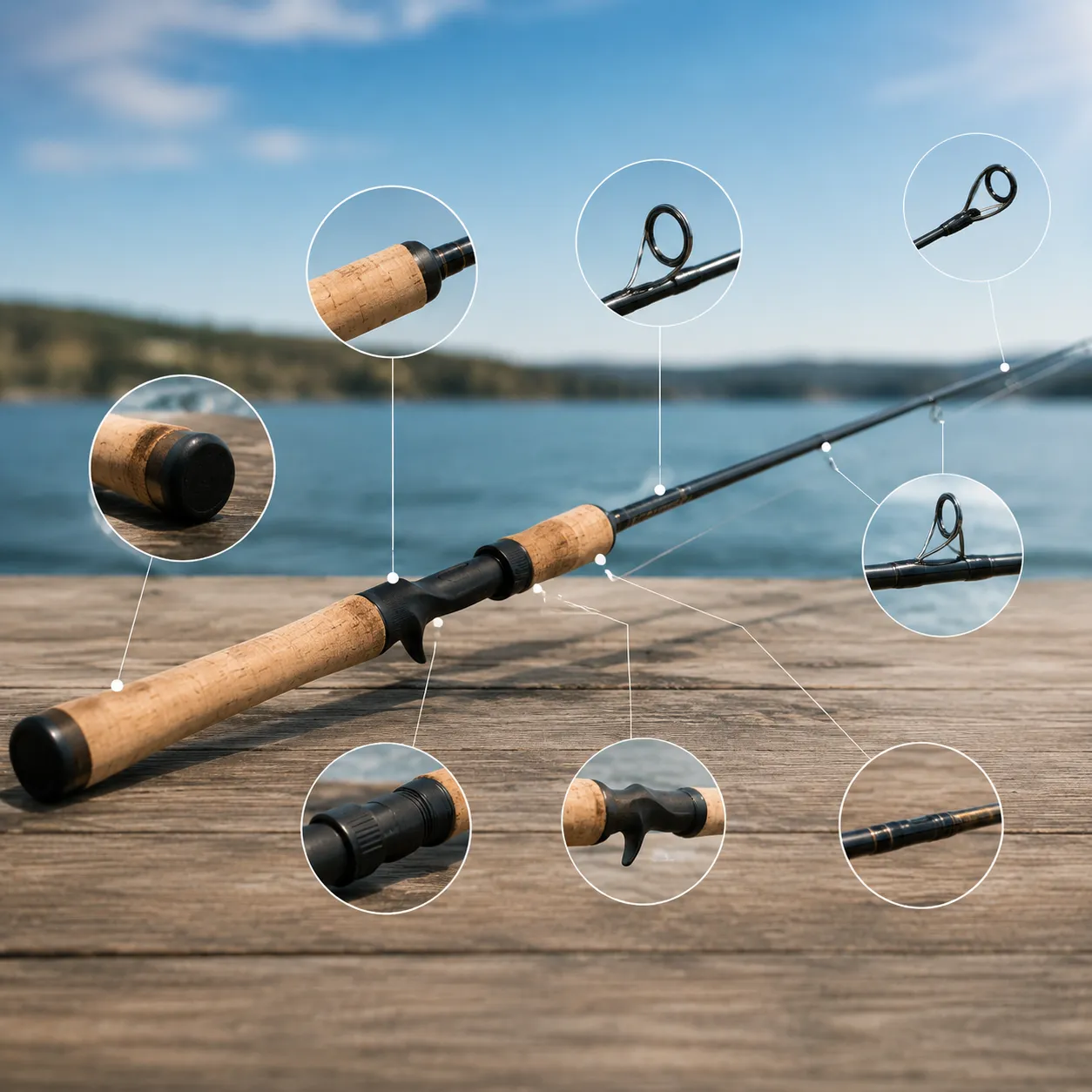
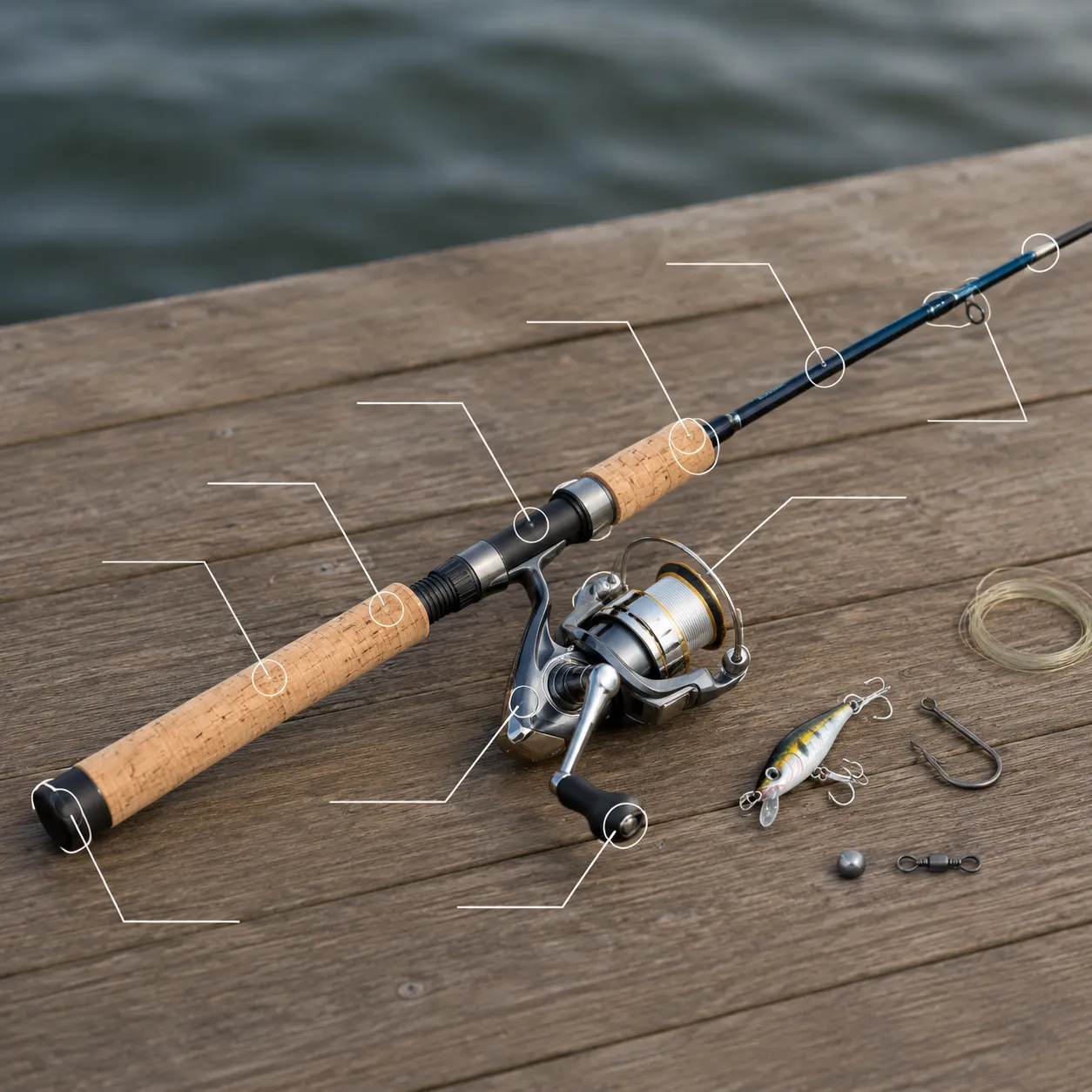
- Handle / Grip: Provides ergonomic leverage and comfort, typically made from high-density EVA foam or premium cork.
- Reel Seat: The dedicated locking mechanism that securely anchors the fishing reel to the blank.
- Line Guides (Eyelets): Graduated rings fixed along the blank using wrapping thread and epoxy resin to control line flow and distribute stress.
- Tip Top: The final guide at the uppermost point of the rod, engineered to withstand high friction and prevent line tangles.
- Hook Keeper & Butt Cap: Secondary hardware designed for lure storage and protecting the base of the rod.
Core Parts of a Fishing Rod Explained
Understanding the structural parts of a fishing pole helps you evaluate rod quality and choose the right equipment for specific fishing environments. Every section serves a distinct functional role, from power transfer to bite detection.
The Rod Blank and Tip Section
The rod blank is the main structural body and spine of the fishing pole.
- Main Body: The hollow pole structure that determines the overall lifting power and flex pattern.
- Tip Section: The thinnest, most flexible portion at the top, engineered for high sensitivity to feel light strikes and cushion line shock.
The Handle and Grip Assembly
Located at the bottom of the pole, the grip assembly ensures ergonomic control and leverage when casting or fighting fish.
- Ergonomics: Provides a secure hold in wet conditions, utilizing lightweight EVA foam or premium cork.
- Configurations: Offered in full-grip or split-grip designs to reduce total rod weight and improve balance.
The Reel Seat and Locking Mechanisms
Positioned directly above or within the handle, the reel seat locks the fishing reel to the blank.
- Locking Rings: Threaded collar mechanisms constructed from corrosion-resistant aluminum or stainless steel.
- Integration: Holds the reel foot firmly in place to prevent twisting under heavy torque.
Line Guides and the Tip Top
Guides line along the blank to distribute stress evenly across the pole during casts and retrieves.
- Eyelets: Smooth inner rings bound to the blank using specialized wrapping thread and coated with durable epoxy resin.
- Tip Top: The final guide mounted on the apex of the blank, built to withstand continuous line friction and extreme bend angles.
Guide Windings and Wrapping Thread on Fishing Poles
Guide windings are the thread wraps that lock each guide foot to the blank before a clear coat of epoxy resin seals the work. On production rods and custom builds alike, winding quality is one of the fastest visual checks buyers can run when reviewing sample fishing gear.
- Wrapping thread: Holds guide feet tight against the blank; uneven spacing or loose ends signal rushed assembly.
- Epoxy finish: A smooth, fully cured coat protects thread from UV, abrasion, and salt spray without trapping bubbles or soft spots.
- Stress distribution: Clean windings keep eyelets aligned so casting loads transfer into the blank instead of peeling a single foot.
- Sourcing note: Ask factories for wrap photos under bright light and for the thread/epoxy system used on saltwater versus freshwater SKUs.
Secondary Hardware Parts of a Fishing Pole
While the main blank and reel seat take center stage, secondary hardware components play a vital role in functionality, convenience, and long-term rod durability. These smaller parts of a fishing pole ensure safe transport and smooth operation during every outing.
Hook Keeper
A hook keeper is a compact wire loop or specialized clip positioned directly above the rod handle.
- Primary Function: Secures your hook, fly, or lure when moving between spots or transporting gear.
- Key Benefit: Prevents exposed hooks from snagging clothing, vehicle seats, or damaging delicate line guides.
- Common Styles: Fixed stainless steel wire rings, folding keepers, and removable rubber-mounted clips.
Butt Cap and Winding Checks
The bottom and trim sections of the rod rely on specialized hardware to shield vulnerable structural points.
- Butt Cap: Fits over the bottom end of the handle. Made from rubber, cork composite, or metal, it absorbs impact when resting the rod ground-side and seals the bottom of the rod blank against dirt and moisture.
- Winding Checks: Small collar rings installed where the grip meets the bare blank. They seal material transitions, protect epoxy seals, and give the rod a clean, finished appearance. Selecting precision components and using reliable hardware tools during manufacturing ensures these fittings seat flush without damaging the underlying blank fibers.
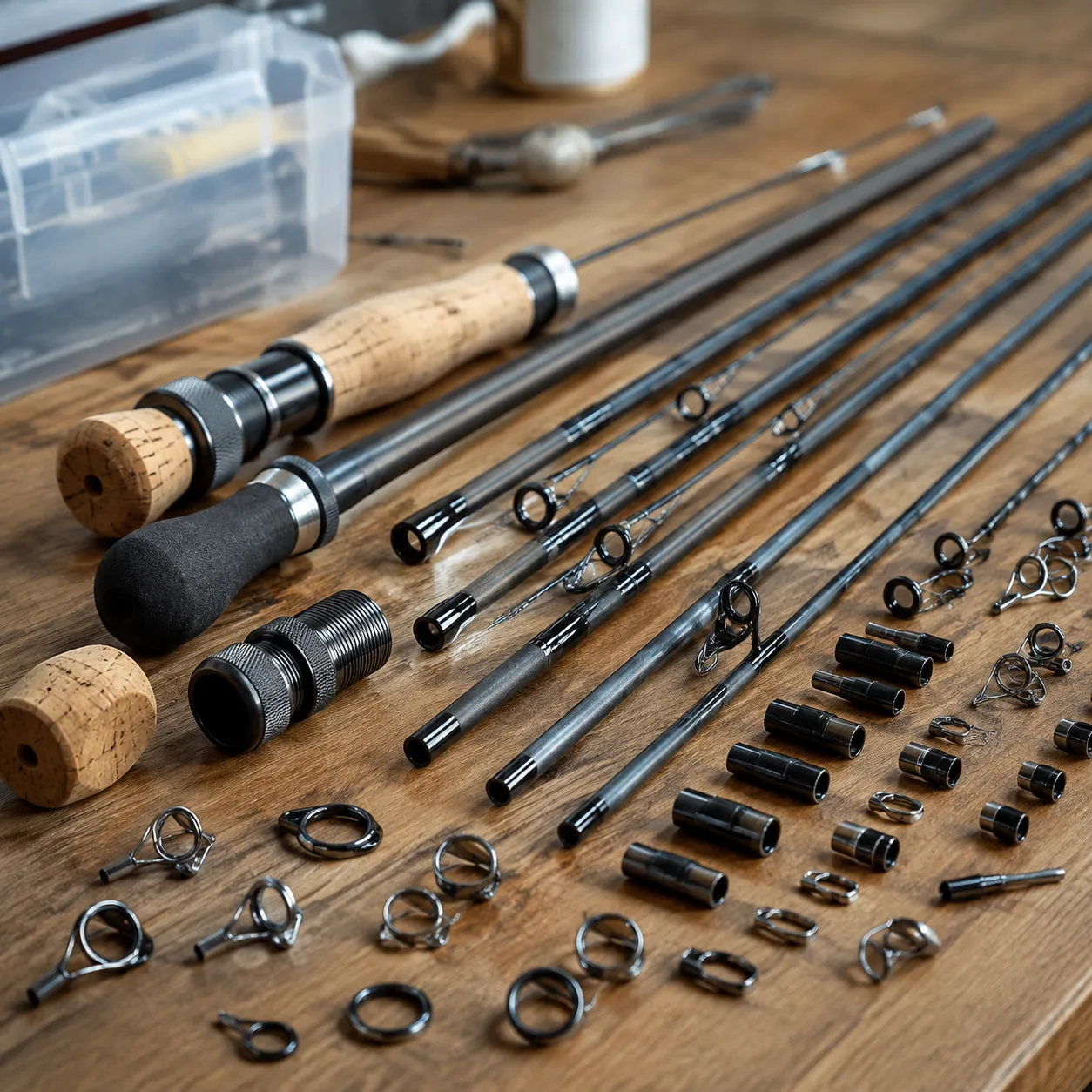
Ferrules on Multi-Piece Rods
On multi-piece fishing rods, ferrules are the structural joints that connect separate blank sections.
- Tip-Over-Butt (Friction Fit): The lower portion of the upper rod section fits directly over the top of the lower section.
- Spigot Ferrules: Uses an internal solid connector insert glued inside the lower section, providing a precise, low-profile connection point.
- Performance Factor: Well-engineered ferrules allow multi-piece rods to flex naturally, maintaining smooth power transfer and preventing sections from twisting loose during hard casts.
Materials Used in Fishing Pole Construction
When we source components for the core parts of a fishing pole, material selection is the single most important factor determining sensitivity, strength, and overall performance.
Graphite and Carbon Fiber Blanks
Graphite and carbon fiber represent the industry standard for high-performance rod construction. We prioritize these materials for anglers who demand maximum sensitivity and minimal weight.[1]
- High Modulus Rating: Offers extreme stiffness, allowing anglers to feel subtle bites instantly.
- Lightweight Build: Reduces angler fatigue during long casting sessions.
- Resin Bonding: High-grade epoxy resin binds the carbon fibers, ensuring structural integrity without adding unnecessary bulk.
Fiberglass Rod Materials
Fiberglass remains the go-to option when durability and flex take priority over raw sensitivity.
- Extreme Toughness: Handles heavy loads, rough transport, and accidental impacts without shattering.
- Moderate Flex: Provides a parabolic bend, making it ideal for deep-diving crankbaits and large target species.
- Cost-Effective: Delivers exceptional longevity at an accessible price point for bulk procurement.
Composite Rod Blanks
Composite blanks combine graphite and fiberglass into a single unified structure. By layering both materials during manufacturing, we capture the advantages of each.
- Balanced Performance: Delivers the bite-detection sensitivity of carbon fiber alongside the structural toughness of fiberglass.
- Versatile Action: Adapts smoothly across various fishing styles, from freshwater trolling to heavy saltwater applications.
Grip Materials: Cork vs. EVA Foam
The handle material directly affects comfort, bite transmission, and grip control in wet conditions.
| Feature | Premium Cork | EVA Foam |
|---|---|---|
| Tactile Feel | Warm, traditional, highly sensitive | Soft, comfortable, firm cushion |
| Durability | High (often enhanced with composite cork ends) | Extremely high; resistant to UV and saltwater |
| Maintenance | Requires occasional cleaning | Easy to wash, non-porous |
| Best Use | Precision freshwater casting | Heavy-duty, saltwater, and rental gear |
How Component Materials Impact Performance
The raw materials engineered into the parts of a fishing pole directly dictate how the final gear performs under tension. From the core rod blank to the guide hardware, material selection influences weight, lifting power, bend profile, and overall responsiveness.
Material Effects on Fishing Rod Power
Rod power measures the lifting strength and resistance to bending. Component materials play a direct role in establishing these power ratings:[2]
- Carbon Fiber & Graphite: Deliver maximum lifting power with minimal mass. High-modulus graphite creates slim, lightweight blanks capable of pulling heavy fish out of thick cover.
- Fiberglass: Bends deeply under load, distributing weight across the entire rod. This material offers immense pulling strength without the risk of brittle snapping.
- Metal Hardware: Heavy-duty components made from stainless steel or aluminum reinforced reel seats provide the structural backbone required for high-power rods.
Material Effects on Fishing Rod Action
Rod action defines where along the length the pole flexes when pressure is applied, as well as how fast it snaps back into place.
- Fast Action: Rigid carbon fiber blanks recover their shape almost instantly, causing flex primarily near the tip section for quick hook sets.
- Slow Action: Flexibly woven fiberglass bends deeper down the blank, offering a smooth, parabolic flex that cushions against sudden lunges.
- Moderate Action: Blanks built from composite blends merge stiffness and flexibility, creating an adaptable middle ground for general angling.
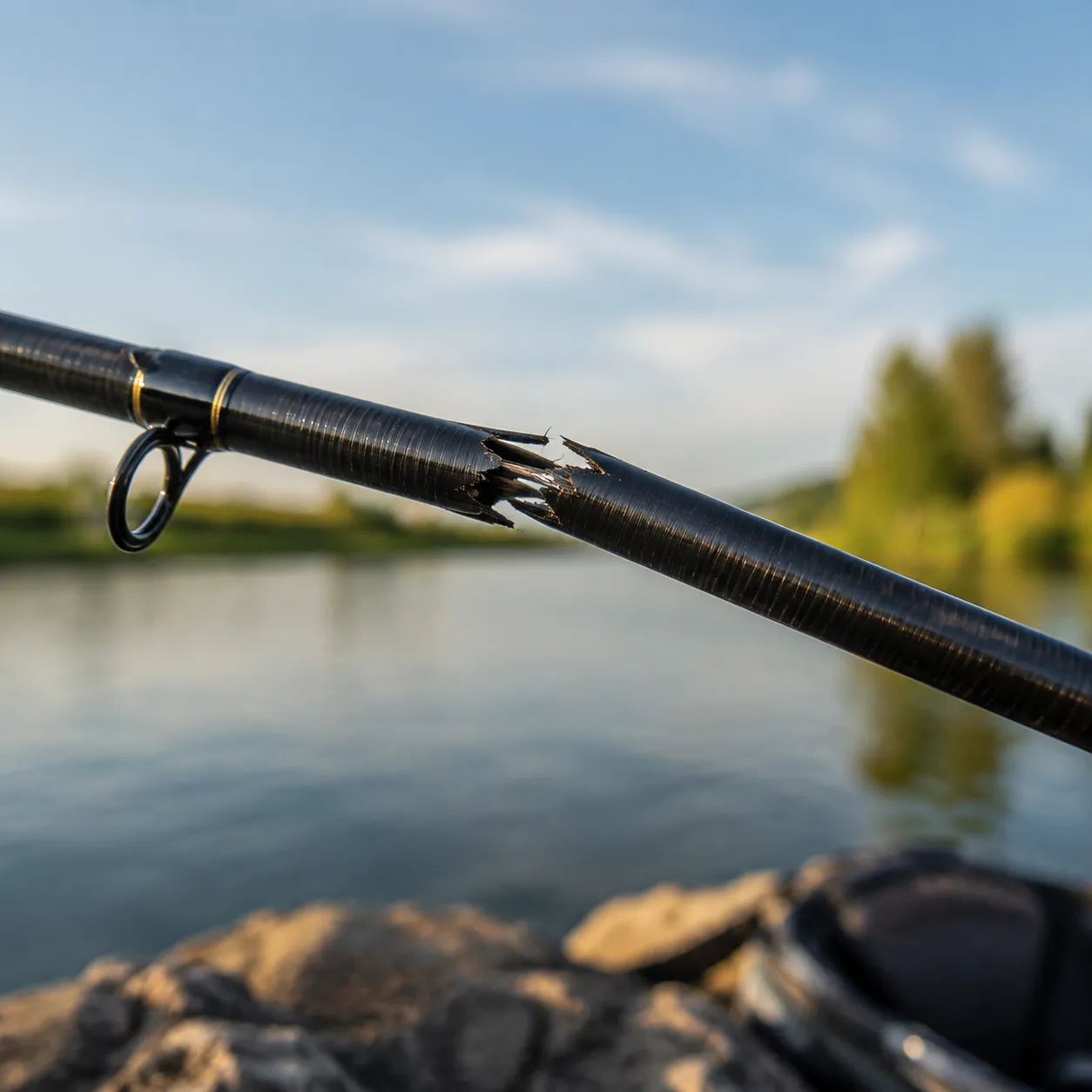
Balancing Sensitivity and Durability
Choosing the right rod components involves balancing tactile feedback against rugged durability.
- Maximizing Sensitivity: Stiffer materials transmit micro-vibrations through the rod blank straight to your hands. Pair a high-modulus blank with hard guide eyelets and high-density composite cork to feel the softest bites.
- Maximizing Durability: Tough EVA foam grips, resilient fiberglass strands, and protective epoxy resin coatings applied over wrapping thread safeguard the rod against drops, boat rash, and tough working conditions.
Fishing Rod Types and How Core Parts Differ
The same parts of a fishing pole appear across categories, but blank taper, guide train, and reel-seat placement change with rod type. Matching type to target water keeps your BOM realistic before you open tooling.[1]
- Spinning rods: Larger stripping guides near the reel, often with a mid-mounted reel seat and lighter graphite or composite blanks for finesse work.
- Baitcasting / casting rods: Smaller guide diameters, trigger grips on many handles, and stiffer tips for accurate lure placement.
- Surf and sea rods: Longer blanks, heavier stainless steel or aluminum hardware, and corrosion-focused finishes for salt spray.
- Telescopic and multi-piece travel rods: Depend on precise ferrules; inspect spigot fit and section alignment on every sample.
- Ice and ultra-light rods: Short blanks with delicate tip sections - specify tip-top hardness and wrap coverage carefully.
How to Choose Materials for the Parts of a Fishing Pole
Matching the right materials to target species and water conditions ensures maximum performance and long-term durability. We evaluate parts of a fishing pole based on structural strength, weight, corrosion resistance, and total production cost.
Selecting Materials for Freshwater Fishing
Freshwater setups prioritize high sensitivity and lightweight handling over extreme heavy-duty armor.
- Rod Blank: High-modulus graphite or carbon fiber provides the ultimate sensitivity needed to detect subtle bites from bass, trout, or walleye.
- Grip Assembly: Composite cork or high-density EVA foam keeps the rod balanced and comfortable during long casting sessions.
- Guide Hardware: Lightweight stainless steel guide frames with smooth ceramic inserts reduce overall weight while protecting thin monofilament and fluorocarbon lines.
Selecting Materials for Saltwater Resistance
Saltwater environments require heavy-duty components built to resist harsh corrosion and intense leverage from large game fish.[3]
- Rod Blank: Durable fiberglass or thick composite blanks offer exceptional flexibility and strength under heavy drag loads.
- Hardware & Reel Seat: Anodized aluminum reel seats and marine-grade stainless steel eyelets prevent rust and salt binding.
- Protective Finish: Heavy-duty epoxy resin seals all thread wraps and rod hardware, preventing saltwater from penetrating the underlying structure.
Comparing Budget vs. Premium Material Options
| Component | Budget Options | Premium Options |
|---|---|---|
| Rod Blank | Standard Fiberglass / E-Glass | High-Modulus Carbon Fiber / Toray Graphite |
| Line Guides | Stainless Steel with Oxide Inserts | Titanium Frames with Silicon Carbide (SiC) Inserts |
| Reel Seat | Molded Nylon / Polycarbonate | CNC-Machined Anodized Aluminum |
| Handle Grip | Standard EVA Foam | AAA-Grade Cork / Custom Composite Cork |
Sourcing Checklist: Inspecting Parts of a Fishing Pole Before Bulk Orders
As a purchasing agent, we treat sample rods as a bill of materials you can hold - not just a catalog photo. Walk each major component before you approve mass production or open a container booking.
- Blank: Check straightness, wall consistency, and finish; reject blanks with soft spots, resin voids, or uneven taper.
- Guides and tip top: Confirm eyelets are centered, feet fully seated, and wrapping thread covered by cured epoxy resin without bubbles.
- Reel seat and hardware: Cycle locking rings; verify aluminum or stainless steel parts are free of burs and salt-trap gaps.
- Grip: Squeeze EVA foam and inspect composite cork rings for cracks or loose adhesive at winding checks.
- Ferrules: Assemble and twist-test multi-piece joints; sections must seat fully without grinding.
- Hook keeper and butt cap: Confirm the hook keeper clears the grip and the butt cap seals the blank end.
- Process control: Tie inspections to factory quality control photos and, when needed, third-party quality inspection before shipment.
When specs are locked, send drawings and tolerance notes through our contact channel so production follow-up matches the approved sample.
FAQ: Parts of a Fishing Pole
What are the main parts of a fishing pole?
The core parts of a fishing pole are the rod blank, handle or grip, reel seat, line guides (eyelets), tip top, plus secondary hardware such as the hook keeper, butt cap, and ferrules on multi-piece rods.
Is a fishing pole the same as a fishing rod?
In everyday buying language, yes - many shoppers use "pole" and "rod" interchangeably for the same long tapered tool that casts line and fights fish.[1] Spec sheets still list the same components: blank, guides, seat, and grip.
Which materials matter most for sensitivity?
High-modulus graphite and carbon fiber blanks transmit bites fastest; pair them with firm grips (composite cork or dense EVA foam) and hard guide inserts so vibration is not lost in soft hardware.
What should importers check on guide wraps?
Inspect thread tension, foot coverage, and the clarity of the epoxy resin coat. Soft or cloudy wraps are a common failure point in humid warehouses and saltwater SKUs.
When should I avoid ultra-light graphite builds?
Skip brittle ultra-light blanks for rental fleets, heavy cover punching, or rough freight lanes - choose fiberglass or composite blanks with tougher hardware instead.