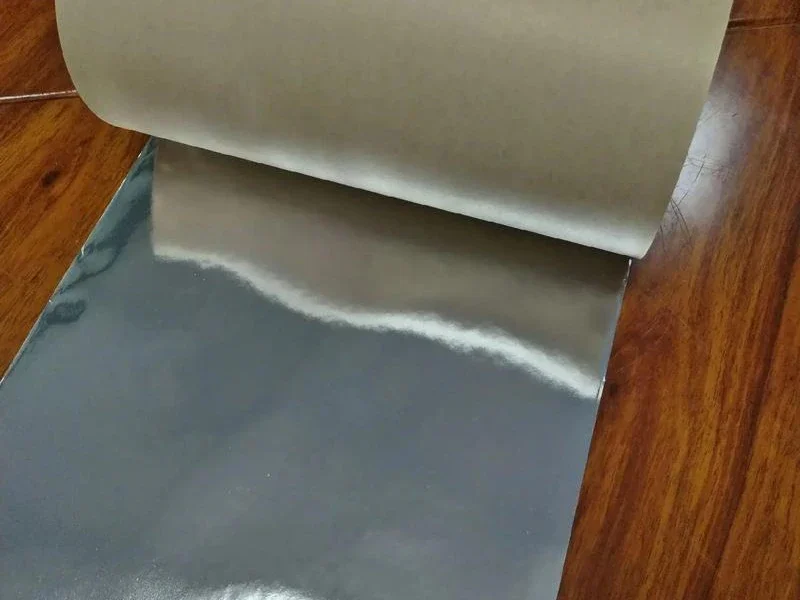

MDF Manufacturers China
Source certified raw, moisture-resistant, and veneered MDF boards directly from vetted Chinese factories. Vela Sourcing simplifies product sourcing, supplier verification, specification matching, quality control, and export logistics to protect your margins.
Direct Factory Network & Custom Specs · Fast Sampling & Spec Approvals · Pre-Shipment Quality Inspections
24–48h Sample Turnaround
Fast sampling and spec approvals so buyers can lock thickness, density, and finish before deposit.
100% Audited Suppliers
Direct factory network screening with capacity and credential checks before shortlisting mills.
FSC / CARB Compliance Support
AQL 2.5 inspection standard plus emission and chain-of-custody documentation support.
Comprehensive Overview of MDF Board Types
Selecting the right medium-density fiberboard core is essential for structural integrity, precise machining, and long-term product performance. Chinese MDF manufacturers produce a diverse range of board types customized for varied manufacturing, decorative, and environmental requirements. Whether you are sourcing raw core boards for heavy CNC milling or pre-laminated panels for commercial cabinetry, matching your application needs with true factory capabilities reduces technical risks. At Vela Sourcing, we evaluate direct mill capacities to align board specifications with your target budget, delivery timelines, and performance standards. Learn more about our approach on our About page.
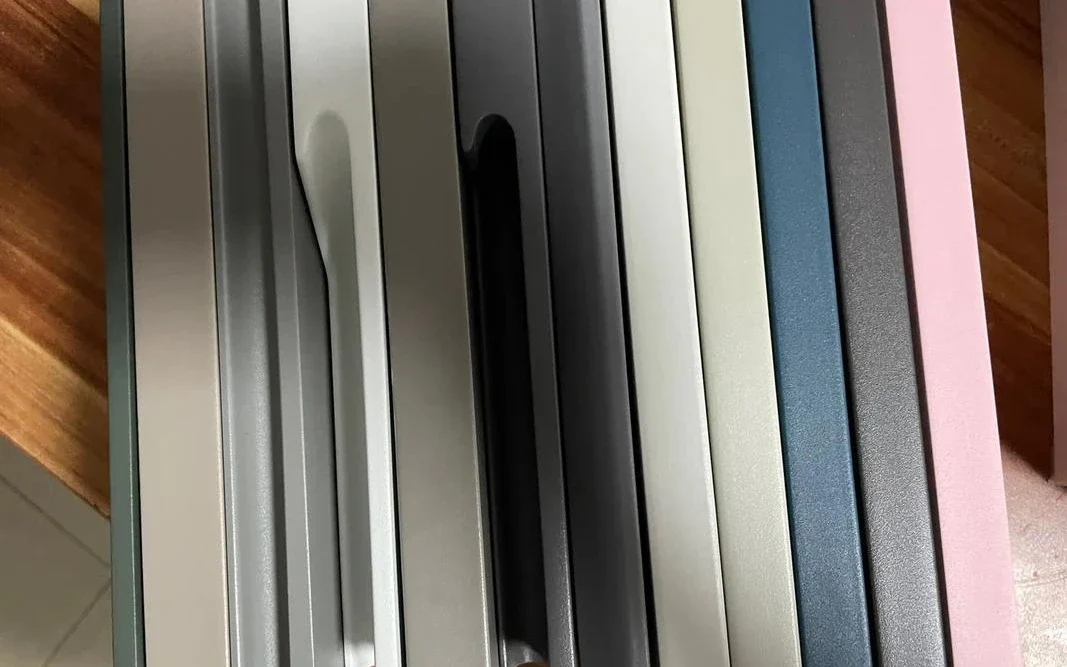
Raw Standard MDF
Unfinished wood fiber panels engineered for uniform internal density, exceptional dimensional stability, and ultra-smooth face sanding. Designed for secondary processing, paint-grade finishing, and custom joinery.
- Key Density: 680 – 750 kg/m³
- Best For: Painted furniture, internal shelving, CNC routing
- Sourcing Tip: Verify face sanding mesh size for smooth paint adhesion
Target Buyer: Furniture OEMs & Joiners
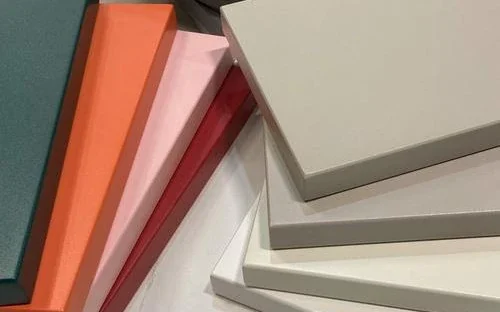
Moisture-Resistant MDF
Formulated with moisture-repellent resin systems (such as MUF) to maintain structural integrity in high-humidity settings. Typically manufactured with a green core dye for quick visual identification.
- Key Standard: Low thickness swelling in humid service
- Best For: Kitchen cabinets, bathroom vanities, skirting boards
- Sourcing Tip: Audit resin formulation, not just green core dye
Target Buyer: Cabinetry Manufacturers
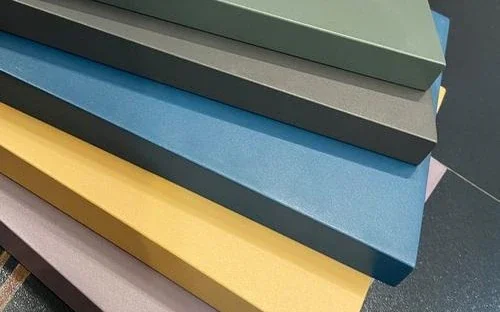
Fire-Retardant MDF
Treated with flame-retardant mineral additives during fiber bonding to slow flame spread and minimize smoke generation in regulated public spaces. Features a distinctive red core tint.
- Compliance: Class B / ASTM E84 / EN 13501-1 rated
- Best For: Hotel interiors, commercial wall cladding, fit-outs
- Sourcing Tip: Request batch-specific lab certification before shipping
Target Buyer: Commercial Contractors
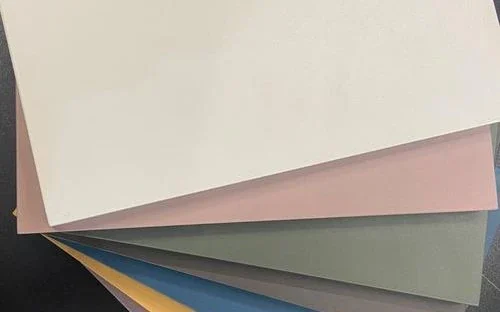
Melamine & Veneered MDF
Factory-laminated boards featuring resin-impregnated decorative paper or natural wood veneers. Eliminates secondary surface finishing to speed up production cycles and cut manufacturing costs.
- Surface Options: Matte, Embossed, High-Gloss, Natural Grain
- Best For: Office furniture, wardrobe panels, RTA furniture
- Sourcing Tip: Confirm paper grammage and surface wear ratings
Target Buyer: Importers & Furniture Brands
Navigating Fiberboard Selection for Bulk Procurement
When sourcing bulk MDF panels from primary manufacturing hubs across China, evaluating key technical specifications prevents costly production errors and field performance issues. Different commercial applications demand precise balance between internal bond strength, core density distribution, and surface smoothness.
Structural & High-Density Board Variations: Standard MDF core density typically averages around 700 kg/m³, ideal for general cabinetry and flat panel processing. However, deep CNC routing or thin profile moulding requires High-Density Fiberboard (HDF) with density ratings above 800 kg/m³ to prevent edge chipping, fuzzy cut faces, and core blowout.
Formaldehyde Emission & Environmental Standards: Compliance requirements vary across international markets. Overseas buyers must verify that raw or laminated panels satisfy CARB Phase 2, EPA TSCA Title VI, E0, or E1 standards. Rigorous supplier audits confirm that resin formulations match official test documentation and local export regulations.
Quick Substrate Selection Comparison
| MDF Type | Core Density | Resin / Additive Type | Primary Risk Factor |
|---|---|---|---|
| Standard Raw | 650 – 730 kg/m³ | Urea-Formaldehyde (UF) | Thickness swelling when exposed to moisture |
| Moisture Resistant | 720 – 780 kg/m³ | Melamine Urea-Formaldehyde (MUF) | Increased tool wear during high-speed tooling |
| Fire Retardant | 750 – 820 kg/m³ | UF + Mineral Flame Salts | Slightly lower screw-holding capacity |
| High-Density (HDF) | 800 kg/m³+ | Reinforced UF / MDI Resin | Higher panel weight and increased freight cost |
Need assistance verifying mill lab reports, resin compliance, or board density before container loading? Get in touch via our Contact page for tailored MDF sourcing support.
MDF Technical Specifications: Thickness, Density, and Performance
Selecting the right MDF board starts with understanding the core technical dimensions. Mismatched board specs lead to structural failures, surface telegraphing, and costly line delays. This guide helps global buyers define precise material requirements before requesting quotes from China MDF factories, and can be used alongside our China sourcing guide for end-to-end procurement planning.
How to Choose the Right MDF Specification
Before submitting an RFP to an MDF board supplier, map out your end-use application. Ideal specifications depend on structural load demands, surface laminating or painting requirements, CNC machining profiles, and ambient environmental conditions—not just the lowest price per sheet.
Thickness Range and Application Match
Standard commercial MDF thickness ranges from 2mm to 40mm. Ultra-thin panels serve as cabinet backings and decorative veneers. Mid-thickness boards (12mm–18mm) are the primary standard for cabinet carcasses and office furniture. Heavy gauge boards (25mm–40mm) support structural tabletops, retail counters, and heavy architectural millwork.
- 2mm–6mm: Cabinet backings, drawer bottoms, decorative door overlays
- 9mm–12mm: Drawer sides, light shelving, interior wall cladding
- 15mm–18mm: Cabinet carcasses, modular furniture, retail display fixtures
- 25mm–40mm: Heavy-duty worktops, commercial counters, architectural molding
Procurement tip: Thicker boards do not guarantee higher flex rates. Verify span ratings and fastener retention before finalizing thickness parameters.
Density Grades and Structural Impact
MDF density is measured in kg/m³ and dictates screw-holding strength, edge integrity, and surface smoothness. Standard density MDF ranges from 680–800 kg/m³. High-density fiberboard (HDF) exceeds 800 kg/m³ and is essential for deep CNC routing, thin profiling, and high-impact commercial furniture.
- Low density (550–680 kg/m³): Lightweight core panels, non-structural filler boards
- Standard density (680–800 kg/m³): Residential furniture, standard cabinetry, interior doors
- High density (800+ kg/m³): Complex CNC routing, edge profiling, high-traffic commercial fixtures
Procurement tip: Higher fiber density increases net weight per sheet—calculate container payload weight limits early when planning bulk MDF board sourcing.
Flatness, Surface Smoothness, and Edge Quality
Diagonal flatness tolerances directly impact automatic lamination, spray painting, and modular assembly alignment. For melamine MDF and wood veneered panels, micro-surface roughness must remain strictly controlled to prevent telegraphing. Uniform core density ensures clean edge-banding adhesion and crisp CNC profiles without chipping.
- Flatness tolerance: ±1.5mm per 1800mm span (standard commercial grade)
- Surface roughness: Ra ≤ 1.5µm for direct lacquering and high-gloss painting
- Edge squareness & core density: Critical for seamless edge banding and blind jointing
Moisture Content and Dimensional Stability
Factory-finished MDF core moisture content typically ranges between 5%–13%. Panels exposed to high humidity during ocean freight or regional transit can experience edge swelling, bowing, or internal delamination. Moisture-Resistant MDF (green core) utilizes hydrophobic resin formulas to handle elevated humidity, though it remains designed for interior use.
- Standard MDF: Engineered for climate-controlled, dry interior spaces
- Moisture-Resistant (MR) MDF: Suitable for kitchens, bathrooms, and humid climates (24h swell rate ≤12%)
- Verify batch-specific moisture readings on pre-shipment lab reports before container loading
Procurement tip: Require real-time moisture testing logs from the production batch. Moisture variations across ocean voyages are a primary cause of board warping.
Spec-First Sourcing Workflow
Identify structural requirements → determine thickness and density tolerance → specify emissions compliance → request formal factory quotes. Following this sequence prevents miscommunication with China MDF manufacturers and eliminates costly spec revisions during production.
Vela Sourcing translates your final product designs into comprehensive technical specs for MDF mills—preventing communication gaps and ensuring batch-to-batch consistency in China manufacturing.
Standard Verification Matrix
Reference tolerances and baseline metrics for export-grade medium-density fiberboard.
| Thickness Parameters | ||
|---|---|---|
| Range | Tolerance | Common Use |
| 2mm–6mm | ±0.2mm | Backing panels, veneers |
| 9mm–18mm | ±0.3mm | Cabinetry, shelving, doors |
| 25mm–40mm | ±0.5mm | Heavy worktops, counters |
| Density Classification | ||
|---|---|---|
| Grade | kg/m³ | Best For |
| Low Density | 550–680 | Non-structural panels |
| Standard Density | 680–800 | General furniture |
| High Density | 800+ | Intricate CNC routing |
Moisture & Swell Dynamics
- Standard moisture content 5%–13%
- MR MDF swell rate (24h soak) ≤12%
- Standard MDF swell rate ≤35%
Surface and Flatness
- Flatness tolerance (standard) ±1.5mm / 1800mm
- Surface roughness (painting grade) Ra ≤ 1.5µm
- Standard board size 1220×2440 / 1830×2440mm
Formaldehyde Emission Standards
- E0 Standard (Japan JIS / GB) ≤0.5 mg/L
- E1 Standard (EU EN 622) ≤0.1 ppm
- CARB P2 / EPA TSCA Title VI ≤0.11 ppm
Decorative Surfaces, Precision Machining, and Customization Capabilities
Transform raw medium-density fiberboard into market-ready architectural elements and modular furniture components. Working with qualified China MDF suppliers enables international buyers to streamline manufacturing by integrating specialized lamination, precision CNC routing, custom edge sealing, and tailored packaging under a unified quality control workflow. Learn more about how Vela supports retail-wholesale buyers with end-to-end sourcing solutions.
Decorative Surface Finishes
Ideal for: Cabinet Makers & Furniture Brands
Specify factory-applied decorative overlays engineered for high wear resistance, UV stability, and precise visual consistency. Sourcing pre-finished melamine MDF and veneered sheets reduces domestic factory labor and minimizes material yield loss.
- Melamine Paper Lamination: Woodgrains, solid matte shades, super-matt textures, and synchronized embossed patterns.
- Natural & Reconstituted Hardwood Veneers: Oak, Walnut, and Ash veneers bonded with low-emission E0 grade resin systems.
- PVC & High-Gloss Foils: Vacuum thermo-foiled options for 3D profiled door panels and bath vanities.
- Paint-Grade & UV Lacquer: Calibrated, ultra-smooth surfaces pre-primed or fully cured for spray finishing.
Precision Cut-to-Size & Dimensioning
Ideal for: Commercial Fit-Out & Retail Display
Industrial computerized beam saws perform exact panel sizing directly during production. Ordering custom cut-to-size panels optimizes shipping container fill rates and reduces jobsite preparation time for rapid installation.
- Tight Dimensional Tolerances: Automated panel sizing held to ±0.2 mm.
- Flexible Sheet Formats: Standard 4x8 ft (1220x2440 mm), 5x8 ft, and oversized 6x12 ft master boards.
- Computerized Yield Optimization: Nesting algorithms minimize raw fiberboard waste.
- Component Identification: Automated inkjet labeling and barcode tagging.
CNC Routing & Machining Services
Ideal for: OEM Furniture Parts & Architectural Studios
Multi-axis CNC processing centers translate CAD production files directly into machined furniture parts, decorative wall cladding, perforated acoustic panels, and ready-to-assemble cabinet boxes.
- 32 mm System Boring: Line-drilling for hinges, shelf pins, drawer slides, and cam-lock fasteners.
- 3D Architectural Profiling: Deep CNC routing, fluted detailing, wave boards, and geometric wall textures.
- Acoustic Perforation & Grooving: Micro-perforated sound absorption patterns.
- Hardware Mortising: Factory-milled pockets for flush-mount handles, locks, and joinery hardware.
Edge Banding & Edge Sealing
Ideal for: Office Furniture & Hospitality Procurement
Protect fiberboard cores against humidity intrusion and physical wear. Automated high-speed edge banders apply matching tapes with clean corner trimming, radius scraping, and buffing.
- PVC & ABS Edge Taping: 0.4 mm to 3.0 mm thickness with color-matched textures.
- PUR Waterproof Adhesive: High-humidity and heat-resistant glue lines for kitchen and bathroom cabinetry.
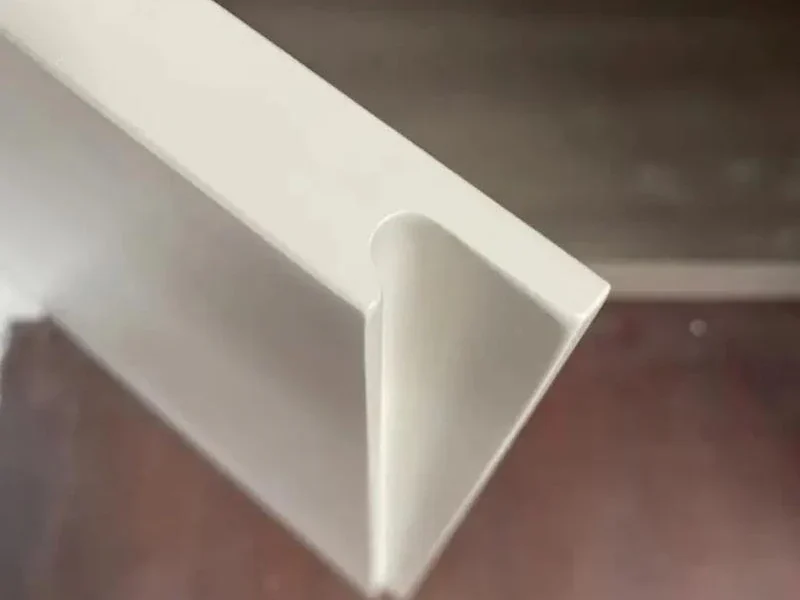
- Beveled & Integrated Handle Edges: J-pull and 45-degree handle profiles.
- Solid Wood Profile Edge Strips: Hardwood edge banding on veneered panels prior to final sanding.
Seamless Custom Fabrication with Strict Quality Management
Custom manufacturing delivers value only when supported by hands-on technical oversight. Vela Sourcing works directly on-site with certified China MDF factories to verify surface finish consistency, check CNC machining tolerances against technical drawings, and test edge bond strength before mass production begins.
±0.15 mm
CNC Drilling Accuracy
E0 / CARB P2
Formaldehyde Compliance
100%
Visual Surface Check
Customization Capabilities Overview
| Custom Processing Feature | Available Specs / Options | Target Application | Buyer Advantage |
|---|---|---|---|
| Surface Lamination | Melamine, Wood Veneer, PVC Thermo-foil, PET High-Gloss | Cabinet Fronts, Wall Paneling, Retail Fixtures | Eliminates downstream finishing and labor costs |
| CNC Profile Routing | 3D Fluting, Wave Patterns, Acoustic Perforations, Mortises | Architectural Feature Walls, Decorative Panels | High-precision execution directly from digital CAD files |
| Edge Banding & Sealing | 0.4-3.0 mm PVC/ABS, PUR Waterproof Glue, J-Pull Profiles | Kitchen Cabinetry, Office Desks, Vanities | Superior moisture resistance and structural durability |
| Custom Packaging & Labeling | Flat-Pack Bundles, Corner Protectors, Barcode Tagging | E-Commerce Furniture, Ready-to-Assemble Goods | Reduces shipping damage and speeds up warehouse sorting |
* Note: Minimum order quantities (MOQs) and lead times depend on specific decorative finishes, core board thickness, and machining requirements. Vela Sourcing conducts pre-production audits to confirm factory processing precision before production release.
MDF Industry Applications and Buyer Use Cases
Medium-density fiberboard (MDF) powers a wide variety of commercial manufacturing, construction, and retail display projects. Matching exact board characteristics—such as core density, surface smoothness, and moisture resistance—to your final product requirements prevents costly material failures, machining delays, and compliance issues. Vela Sourcing bridges technical specifications with proven Chinese factory capabilities, ensuring your engineered wood orders meet strict performance standards from day one.
Cabinetry & Furniture Manufacturing
High-volume furniture factories require homogeneous board cores for clean edge profiling, smooth CNC routing, and zero internal voiding during intense machining processes.
Key Sourcing Priorities
- Core Density: Consistent 720–780 kg/m³
- Surface Finish: Melamine pre-laminated or raw paint-grade
- Fastener Retention: High screw-holding capability for assembly
Interior Fit-Out & Architectural Panels
Commercial interior contractors demand specialized architectural boards that meet strict municipal building codes, resist environmental humidity, and handle decorative laminates.
Key Sourcing Priorities
- Moisture Resistance: Green-core MR MDF (ISO/EN compliant)
- Fire Retardancy: Red-core Class B / ASTM E84 compliance
- Acoustic Machining: Precision CNC slitting and perforations
Retail Fixtures & Display Units
Store fixture fabricators require superior surface smoothness for mirror-finish lacquering, high-pressure laminate (HPL) bonding, and rapid custom display rollouts.
Key Sourcing Priorities
- Thickness Tolerance: Strict ±0.2 mm variance limits
- Custom Formats: Oversized panels (e.g., 6x9 ft or 6x12 ft)
- Surface Calibrations: Factory-sanded 150–240 grit finish
Door Manufacturing & Millwork
Door skin laminators and architectural woodworking plants rely on ultra-thin or deep-routing MDF grades engineered for structural dimensional stability with zero panel warping.
Key Sourcing Priorities
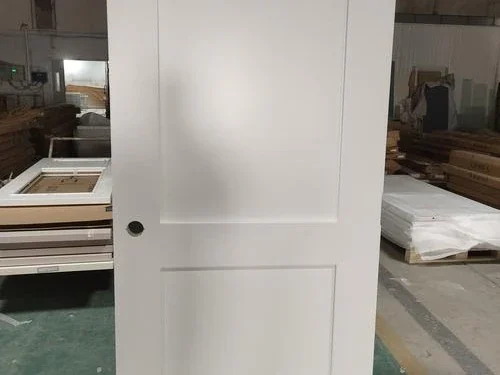
- Molded Skins: Thin high-density fiberboard (2.5mm–4mm)
- Deep Routing Grade: High surface and core fiber density
- Moisture Control: Strictly balanced 6–8% moisture content
Building Material Importers & Wholesalers
Bulk distributors trading raw and laminated stock sheets need dependable supply chains, competitive containerized volume pricing, and fully verifiable eco-certifications.
Key Sourcing Priorities
- Emission Standards: CARB Phase 2, EPA TSCA Title VI, F4-Star
- Container Yield: Optimized cubic-meter pallet loading
- Cost Predictability: Stable raw material contract pricing
E-Commerce Furniture & Flat-Pack Brands
Direct-to-consumer furniture enterprises require precise CNC pre-drilling for knock-down hardware, optimized board weights, and reinforced transit-ready packaging.
Key Sourcing Priorities
- Machining Accuracy: Tight cam-lock drilling tolerances
- Weight Optimization: Lightened core variants to lower shipping fees
- Drop-Test Packaging: Edge-protected, mail-order packaging

Aligning Product Specifications with Factory Capabilities
Sourcing MDF directly from Chinese board manufacturers requires a granular assessment of each mill’s production strengths. Choosing a supplier solely based on the lowest price per sheet often results in edge chipping, resin telegraphing, or severe warping during secondary processing.
At Vela Sourcing, we systematically map your exact end-use requirements to verified Chinese factories. Our MDF-focused product sourcing services establish clear material specs, verify formaldehyde compliance certificates, and drive quality inspection so we protect your supply chain before container loading.
Regulatory Certifications, Eco-Standards & Quality Control
Verifying environmental compliance and structural performance for wholesale MDF procurement in North American and global markets.
Navigating Environmental Regulations and Formaldehyde Standards
Importing medium-density fiberboard (MDF) into the United States and other strictly regulated markets requires strict adherence to emission standards. As experienced MDF manufacturers and sourcing partners, we ensure that every board batch complies fully with CARB Phase 2 and the EPA TSCA Title VI regulations. These standards limit formaldehyde emissions to a maximum of 0.11 ppm for thin or standard MDF products.
For specialized applications, such as healthcare facilities, educational institutions, or eco-conscious furniture lines, we source ultra-low-emitting formaldehyde (ULEF) and non-added formaldehyde (NAF) resin formulations. Understanding the distinction between basic factory certificates and actual batch-level compliance protects your brand from severe customs penalties, product holds, or expensive product recalls.
Beyond Paperwork: Multi-Stage Quality Assurance
A valid certificate is merely the baseline. Genuine quality control requires active oversight directly on the factory floor. Vela Sourcing enforces rigorous batch testing protocols to verify that physical performance matches published specifications prior to export loading.
- Formaldehyde Emission Testing: Desiccator and gas analysis testing on random production samples for CARB P2 and EPA compliance.
- Core Density & Moisture Content: Verifying core consistency for high-speed CNC routing and edge profiling.
- Internal Bond & Thickness Swell: Assessing water absorption and internal fiber bond strength for MR MDF grades.
- Surface Calibrations & Smoothness: Sanding tolerance checks for melamine, veneers, or high-gloss lacquers.
The Risk of Unverified Factory Claims: Many overseas buyers rely solely on static PDF certificates. Resin formulas can vary between production runs. Vela Sourcing conducts third-party lab testing and unannounced factory audits to ensure continuous compliance across every shipment.
MDF Compliance Checklist
- CARB P2 / EPA TSCA Title VI (Mandatory US): Regulates formaldehyde emissions; requires TPC auditing.
- FSC / PEFC CoC Certification (Eco-Standard): Chain of Custody tracking for responsibly managed forests.
- CE Mark / EN 13986 (EU Requirement): Health, safety, and environmental standards for construction-grade boards.
- ISO 9001 Quality Management: Standardized procedures for density, sanding, and dimensional tolerance control.
Verification Guaranteed: We cross-check all factory certificates with official TPC databases.
Ensure 100% Compliance for Your Next MDF Shipment
Avoid customs delays, resin non-compliance fines, and quality defects. Partner with Vela Sourcing for fully audited Chinese MDF supply chains.
Request Quality AuditStandard Supplier vs. Vela Sourcing Quality Control
| Quality & Compliance Stage | Standard Factory Direct | Vela Sourcing Managed Process |
|---|---|---|
| Certificate Verification | Provides static copy of paper certificates; unverified validity. | Cross-checked with issuing agencies and TPC database records. |
| Pre-Production Inspection | Assumes raw material consistency; no pre-press testing. | Verifies fiber moisture, resin ratio, and wax blend prior to pressing. |
| In-Line Tolerance Checks | Occasional automated gauge checks by factory operators. | Independent calibrated caliper checks for thickness and squareness. |
| Formaldehyde Batch Testing | Relies on annual or quarterly factory self-testing reports. | Third-party laboratory testing per batch prior to container loading. |
MOQs, Packaging Standards, and Export Logistics
Navigating bulk MDF board sourcing requires a clear understanding of minimum order quantities, protective export packaging, and international container freight planning to avoid transit damage and keep landed costs low.
3-Step Procurement & Shipping Workflow
MOQ Alignment & Spec Lock
Minimum order requirements vary based on board thickness, core density, surface laminates, and custom colors. Standard raw MDF boards typically start at a 1x20ft FCL minimum (approx. 21 to 28 CBM), whereas specialized melamine patterns or custom CNC cut-to-size orders carry specific factory setup thresholds.
- Raw MDF Panels: 1x20′ GP container (approx. 400–1,800 sheets depending on board thickness)
- Melamine & Veneer: Higher thresholds for non-standard decor paper or custom surface textures
- Cut-to-Size Components: Calculated by CNC setup time, edge banding specs, and master sheet yield
Stage Goal: Unit Cost & MOQ Optimization
Export Packaging Setup
Rigid protective packaging prevents crushed corners, face scratches, and core swelling caused by sea-freight humidity. Heavy-duty runner pallets, thick protective cover sheets, and reinforced steel or PET strapping are mandatory standards for all bulk shipments.
- Pallet Base: Fumigated solid wood or engineered plywood skids with ISPM-15 IPPC stamps
- Outer Protection: Heavy MDF/hardboard top & bottom covers with reinforced paper corner guards
- Sealing & Strapping: Multi-layer PE stretch wrapping secured with a minimum of 4x3 high-tensile straps
Stage Goal: Zero-Transit-Damage Guarantee
Container Loading & Dispatch
Maximizing container volume while complying with highway and destination port weight limits is essential. Overseas buyers must balance volumetric payload against gross container weight limits to lower total landed costs per sheet.
- 20ft GP Container: Preferred for heavy raw MDF panels (maximizing weight up to 21,000–26,000 kg)
- 40ft HQ Container: Ideal for lighter thin sheets, cut-to-size furniture parts, or bulk LCL crates
- Weight Audits: Pre-shipment VGM checks before port gate-in to avoid overweight penalties
Stage Goal: Landed Cost Efficiency

Protective Packaging Standards for Sea Freight
- Corner & Edge Guards: Thick corrugated cardboard or rigid plastic angle guards protect all eight edges.
- Moisture-Proof Barrier: Multi-layer PE stretch film with internal desiccant packs.
- High-Tensile Strapping: Minimum of 4 vertical and 3 horizontal steel or PET bands.
- ISPM-15 Compliance: Solid wood pallet skids with official heat-treatment IPPC stamps.
Logistics Key Insight: Vela Sourcing aligns factory packaging specs, container loading limits, and shipping documentation before production begins, preventing costly demurrage charges or damaged inventory at your destination port.
MDF Supplier Vetting and End-to-End Procurement Workflow
Sourcing MDF from China requires far more than matching unit prices—it demands a structured execution model from initial factory screening to container sealing. Every handoff introduces risk regarding board density, surface quality, and compliance. A disciplined workflow ensures your specs are strictly met, protecting your project timelines and landed costs. See also our process overview.
Factory Screening and Initial Quotation
Identify specialized MDF manufacturers capable of meeting your exact board type, thickness range, surface finish, and volume requirements. We demand itemized cost breakdowns—not vague FOB estimates—to accurately evaluate core board production, lamination capability, lead times, and packaging protection.
Risk: Unusually low initial quotes frequently hide crucial costs like palletized packaging, FSC fees, or export documentation.
Credential Verification and Capacity Audit
Thoroughly vet factory credentials to guarantee that environmental and quality certifications—including FSC, CARB P2, E1/E0, and EPA TSCA Title VI—are active and tied to the exact production line making your order. We assess physical plant machinery to ensure steady delivery during peak demand.
Risk: Factories often present valid overall plant certificates that fail to cover the specific board grade or resin system ordered.
Sample Approval: Dimensions, Surface, and Performance
Physical sample approval is the definitive safeguard for validating board specifications prior to mass manufacturing. We test physical samples for exact thickness tolerance, core density uniformity, surface smoothness, and lamination integrity to establish clear production standards.
Risk: Factories may use premium fiber logs for approval samples but switch to cheaper wood fiber during full-scale runs.
Production Monitoring and Lead Time Management
Hands-on tracking during mass production halts quality drift and prevents missed shipping deadlines. We monitor every stage of production—from fiber prep and pressing to cooling and sanding—ensuring strict adherence to your technical criteria.
Risk: Unmonitored plants running parallel orders often push smaller overseas shipments behind larger domestic runs.
Pre-Shipment Inspection and Export Coordination
A rigorous pre-shipment inspection (PSI) serves as the final barrier before goods leave China. We verify board dimensions, surface quality, moisture levels, piece counts, and packaging strength before balance payments are authorized or shipping containers are loaded.
Risk: Forgoing PSI is the primary cause of receiving damaged or non-compliant board shipments with little leverage for claims.
Why a Structured Workflow Matters for MDF Sourcing
Every stage in this procurement framework directly addresses a common point of failure in bulk wood panel manufacturing. Bypassing supplier qualification leads to invalid emission certificates. Skipping physical sample validation results in color or density discrepancies. Neglecting production tracking causes quality drift, and skipping final pre-shipment inspections leaves buyers vulnerable to costly transit damage.
Vela Sourcing manages this entire workflow as an integrated, transparent service—from shortlisting qualified mdf board supplier options to overseeing container loading. Our process minimizes expensive rework, keeps project timelines on schedule, and provides full transparency for every shipment.
5-Stage
End-to-end process
Risk-Flagged
Critical checkpoints
Full-Chain
Screening to shipment
Frequently Asked Questions: Sourcing MDF Directly from China
Get clear, direct answers to common questions regarding MDF board types, technical specifications, MOQ calculations, quality control standards, and supplier verification for retail and wholesale buyers.
What is the primary difference between standard MDF and Plywood for volume manufacturing?
MDF (Medium-Density Fiberboard) features an ultra-homogeneous core made of fine wood fibers bonded under heat and pressure. It provides a flawless, uniform surface without knots, voids, or grain patterns, making it ideal for precision CNC routing, custom profiling, edge banding, and high-gloss melamine or lacquered finishes. Plywood, composed of cross-laminated wood veneers, offers superior structural bending strength and moisture resilience, but requires more labor-intensive surface prep for smooth finishing. Procurement Insight: For panel furniture, cabinetry doors, retail displays, and decorative wall panels where exact dimensions and smooth surfaces are paramount, MDF provides better dimensional consistency at a more competitive price point.
Which type of MDF board is recommended for furniture and cabinetry in high-humidity regions?
For kitchen cabinets, bathroom vanities, and tropical climates, standard raw MDF is susceptible to linear expansion and edge swelling when exposed to moisture. You should specify Moisture-Resistant MDF (MR MDF), typically manufactured with melamine-urea-formaldehyde or hydrophobic resin systems (often tinted green for easy identification). Thickness Swell Rate: Should remain below 8% to 10% after 24-hour water immersion tests. Surface Lamination: Pair MR MDF cores with thermal-fused melamine paper or PVC edge banding using PUR adhesive for total seal protection. Sourcing Support: Vela Sourcing validates resin formulations with Chinese manufacturers to ensure MR MDF shipments meet strict water-absorption tolerances prior to mass container loading.
How are Minimum Order Quantities (MOQs) structured by China MDF manufacturers?
MOQs for MDF board sourcing vary based on board customization level, thickness, and surface treatment: Standard Raw MDF (Standard Sheet Sizes): Typically 1 x 20ft FCL (Full Container Load), equivalent to approximately 400 to 800 sheets depending on thickness (e.g., 18mm vs. 3mm). Melamine / Veneered / Laminated MDF: 1 x 20ft FCL, but manufacturers often allow mixing 2 to 3 decor paper patterns per container if total volume thresholds are met. Custom CNC Cut-to-Size or Fire-Retardant MDF: Higher MOQs (usually 1 x 40ft HQ or ~50-100 cubic meters) due to specialized continuous press recalibration and raw material batch mixing. Cost Efficiency Tip: Standardizing panel dimensions to standard 4x8 ft (1220x2440 mm) sizes drastically lowers MOQs and optimizes sea freight container space utilization.
Which formaldehyde emission certifications are required for importing MDF into US and European markets?
To prevent customs delays and legal compliance issues, imported engineered wood panels must strictly comply with regional environmental standards: United States Market: Requires strict compliance with CARB Phase 2 (California Air Resources Board) and EPA TSCA Title VI regulations. European Union Market: Mandatory compliance with E1 or E0 emission standards (EN 717-1 standard) and EU Timber Regulation (EUTR) origin tracing. FSC Certification: Forest Stewardship Council Chain-of-Custody (CoC) certification is frequently requested by premium retail buyers to guarantee sustainable wood sourcing. Verification Note: Vela Sourcing cross-checks factory mill test reports with third-party lab testing (SGS, Intertek, TUV) to ensure every production batch actually complies with certified limits.
How can buyers effectively verify a China MDF factory before issuing a deposit?
Verifying an MDF supplier requires looking beyond glossy digital catalogs or online trader profiles: Audit Production Line Machinery: Tier-1 MDF factories utilize continuous press lines (e.g., Dieffenbacher or Siempelkamp continuous presses) ensuring consistent density profiles and precise thickness tolerances. Validate Raw Material Stocks: Confirm whether the supplier maintains steady wood fiber reserves, preventing unexpected batch color shifts or resin quality drops during mass production. Inspect Export Packaging Standards: Verify that heavy-duty wooden pallets, edge protector boards, steel strapping, and waterproof plastic film wrapping are used to prevent moisture damage and corner crushing during sea transport. End-to-End Execution: Vela Sourcing conducts pre-factory audits, pre-shipment inspections, and container loading supervision directly at Chinese manufacturing facilities to eliminate non-conformance risks.
Have specific technical or order requirements?
Our team streamlines factory matching, custom sampling, and quality control.
Consult Our MDF ExpertsRequest MDF Supplier Quote
Partner with Vela Sourcing to evaluate vetted MDF manufacturers in China through our product sourcing support. From custom finishes and strict compliance testing to quality inspection and pre-shipment inspections, we protect your specifications at every step.
Contact Vela Sourcing Team
- WhatsApp: +86 13954091520
- Email: sales@velasourcing.com
- Address: No. 1120, Shunhua Road Subdistrict, Lixia District, Jinan City, Shandong Province, China
- Sample Verification
- CARB/FSC Compliance
- Pre-Ship Inspection